


How Long Does an Oil Change Take?
- Well, it depends! If there’s no one ahead of you, or you schedule Toyota Express Service, we can often have you in and out after about half an hour. If there are cars ahead of you, it might take us a little longer to get to you. We don’t want you to spend any unnecessary time in the shop, so we aim to get you in and out as quickly as we can without sacrificing our quality. Oil changes are usually a quick and easy maintenance item, but they’re one of the most important things you can do to keep your Toyota running smoothly. Oil lubricates your entire powertrain, circulating through it to reduce temperature and friction, helping your engine operate efficiently. It also absorbs any dirt and grime that accumulates in your engine, helping keep it clean. As the oil accumulates more particles, it must be flushed and replaced.
How Often Should I Change My Oil?
- When oil enters your car, it is translucent and usually takes on a yellowish hue, but that’s a far cry from the oil we drain, which is brown and can become sludgy over time. This change occurs as your oil cleans your engine; the more particles it absorbs, the thicker and less effective it becomes. As this happens, you’ll need an oil change. If your car runs on the same oil for too long, it will decrease performance and efficiency, ultimately leading to smoke, knocking, and engine failure. So, how often should you change your oil? The answer depends on the different types of engine oil your vehicle uses. Newer Toyotas can go 10,000 miles between oil changes, while older models may need an oil change every 3,000 to 5,000 miles. We break down the types of oil Toyotas use in the section below.
What Type of Oil Should I Use in My Car?
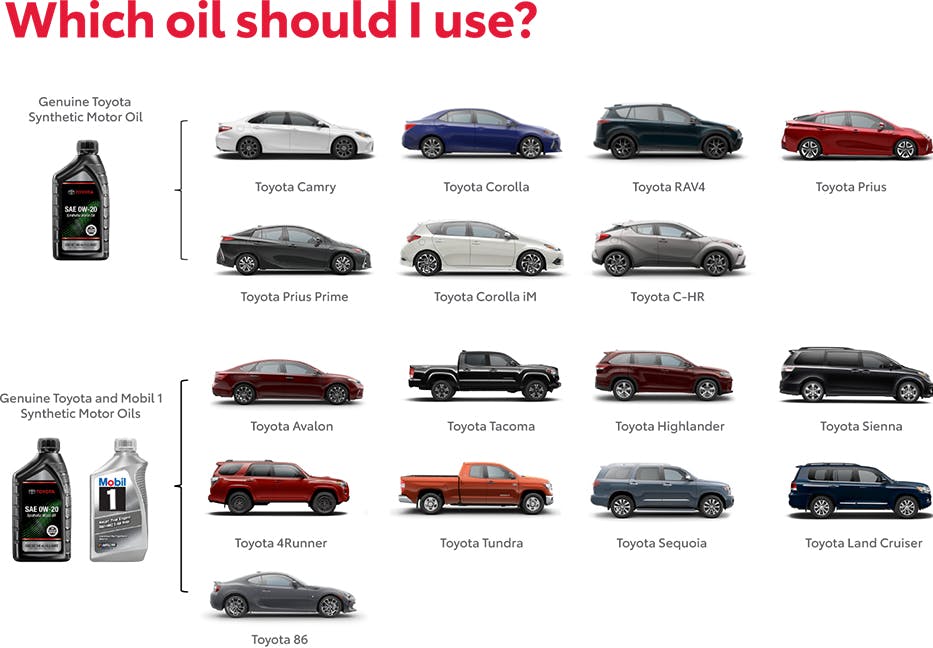
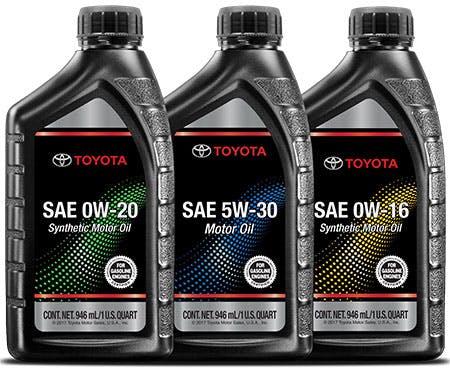
Older Toyotas and simpler engines typically use conventional oil, which should be replaced every 3,000 to 5,000 miles. It’s the most affordable type of oil, but it doesn’t last as long as other types. Newer Toyotas use synthetic oil, a high-performance product that lasts 10,000 miles, though it is more expensive. We’ve broken down all the different types of engine oil below:
- Conventional Oil: The classic type of oil, though less frequently used today. It is used in older, simpler powertrains and is the most affordable option.
- Full Synthetic Oil: Synthetic oil is chemically modified to remove impurities and lasts longer than conventional oil, performing better in extreme temperatures.
- Synthetic Blend: Blends offer lower pricing than full synthetics while delivering performance comparable to conventional oil.
- High-Mileage Oil: As the name suggests, this product is used to help maintain high-mileage powertrains.